New Orleans is an unusually forgiving city to visit and an unusually easy one to misread. The mistakes visitors make are rarely dramatic. They are small, cumulative, and expensive: three days booked in the wrong month, a two-hour wait for a meal available with no wait four blocks away, a taxi taken along a route the streetcar covers better. None of these ruin a trip. All of them are avoidable. What follows is the accumulated practical knowledge that residents assume everyone already has, organized so you can actually use it.
Time Your Visit Around the Weather, Not the Calendar
The single most consequential decision you will make is which month you arrive, and the honest ranking is not what the marketing suggests. February through May is the city at its best: warm days, cool evenings, blooming courtyards, and a festival nearly every weekend. October and November are nearly as good and considerably less crowded, with the added advantage that hurricane season is winding down.
June through September is genuinely difficult. Not merely hot but humid in a way that has to be experienced to be believed, with afternoon heat indexes that regularly pass one hundred and five degrees and thunderstorms that arrive at three in the afternoon with startling violence. If summer is your only option, invert your day: be outside before ten in the morning and after six in the evening, and spend the brutal middle hours in museums, long lunches, and air conditioning. Locals do exactly this and it works.
A word on Mardi Gras. It is extraordinary and it is not a normal visit. Room rates triple, minimum stays lengthen, streets close, and the city runs at maximum capacity for two weeks. If you want the parades and the spectacle, come for it deliberately and book six months ahead. If you want to see New Orleans, come literally any other week.
Learn the Three Free or Nearly Free Ways to Get Around
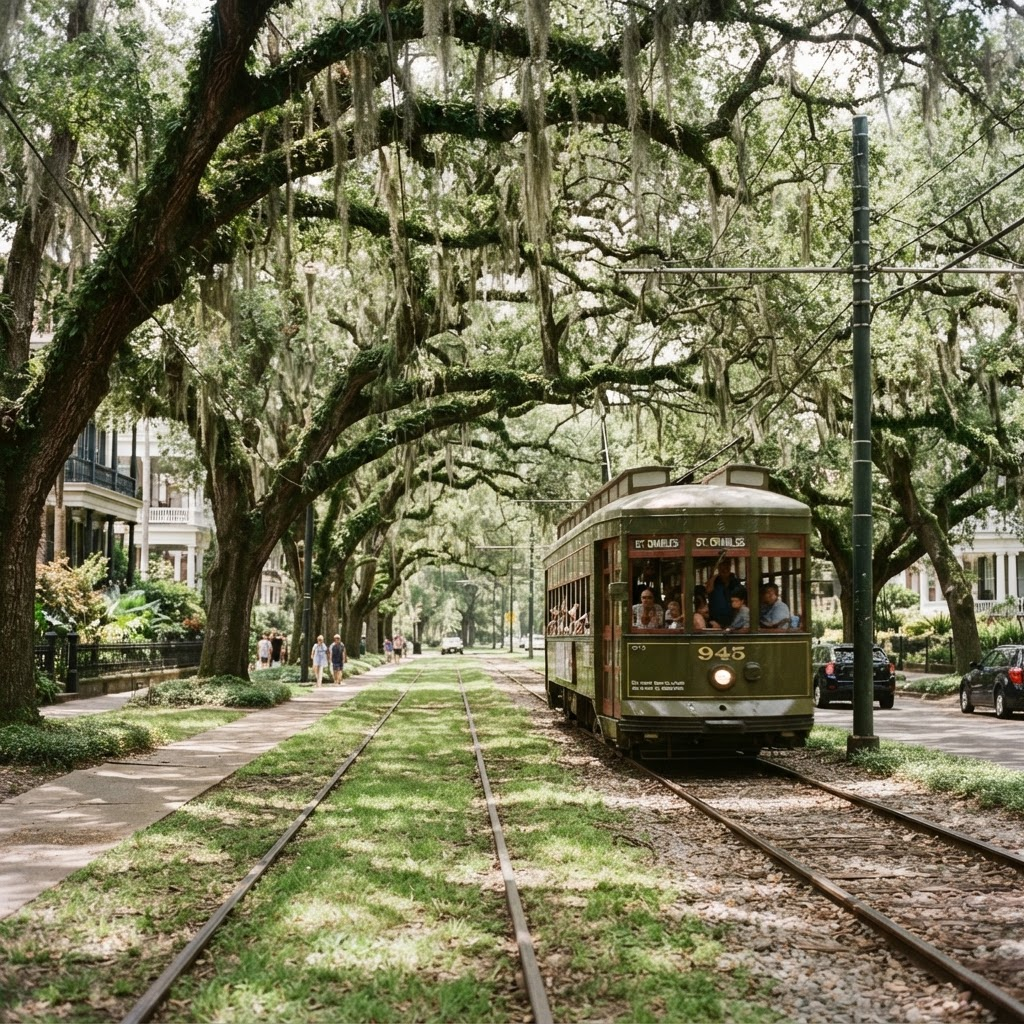
Rideshare and taxis work fine here, but three cheaper options are better for most trips. The streetcars cover the routes visitors actually need: St. Charles for Uptown and the Garden District, Canal for Mid-City and City Park, Riverfront along the water, and Rampart to the edge of the Marigny. A single fare is a couple of dollars and a one or three day Jazzy Pass pays for itself in about four rides. Buy the pass through the transit app before you need it.
The Algiers ferry from the foot of Canal Street is the cheapest scenic cruise in America and runs all day. And walking covers more of this city than newcomers expect: the Quarter to the Marigny is ten minutes, the Quarter to the Warehouse District is fifteen, and the Quarter to the Garden District is a pleasant forty-five if the weather cooperates.
What to avoid is driving. Street parking in the Quarter ranges from difficult to impossible, the enforcement is efficient and unsentimental, and many historic streets flood in heavy rain. If you arrive by car, book accommodation with dedicated parking and then leave the car there.
Order Food Like Someone Who Has Been Here Before
A few distinctions save confusion. A po-boy comes on Leidenheimer-style French bread with a shatter-crisp crust and a soft interior, and when the counter asks if you want it "dressed," they mean lettuce, tomato, pickle, and mayonnaise. Say yes. Gumbo is a dark roux-based stew served over rice, jambalaya is rice cooked in the seasoning itself, and étouffée is a thicker smothered dish, usually crawfish, ladled over rice. Creole cooking is the city's tomato-and-butter tradition with French and Spanish roots; Cajun came from the rural parishes to the west and leans more rustic and peppery. Restaurants blur the line constantly and nobody minds.
Two habits separate visitors from residents. First, the famous restaurants take reservations and the good neighborhood ones frequently do not, so build your trip around one or two booked meals and improvise the rest. Second, the best meal you eat here will probably cost under fifteen dollars and come from a counter with fluorescent lighting and a hand-lettered sign. Follow the line of people in work clothes at noon.
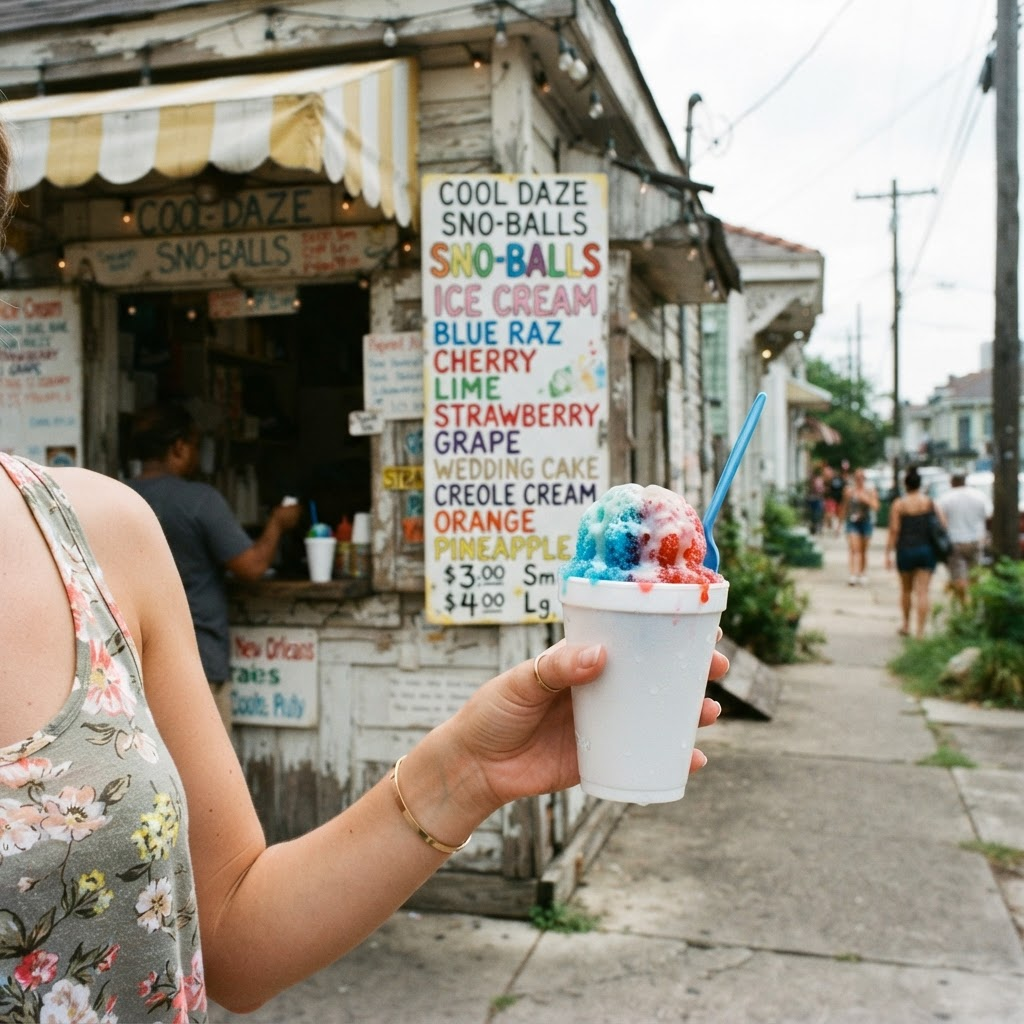
And when the heat becomes unreasonable, find a snoball stand. Not a snow cone: New Orleans snoballs are shaved to the texture of fresh powder and soaked in syrup, sold from small neighborhood stands that open in spring and close in fall. Ask for it with condensed milk on top at least once.
Understand the Etiquette Nobody Writes Down
New Orleans has a working culture, not just a tourist economy, and a handful of small courtesies mark you as a good guest.
Tip the musicians. Street performers and brass bands make their living from the bucket or hat in front of them, and club musicians are frequently paid from a tip jar passed between sets. If you stopped, listened, and enjoyed it, contribute. Twenty dollars for an hour of world-class live music is the deal of a lifetime and everyone involved knows it.
Ask before photographing people. This applies especially to Mardi Gras Indians in their hand-sewn suits, second line participants, and musicians. These are sacred and personal traditions to the people practicing them, not set dressing. Almost everyone says yes when asked.
Learn what a second line is before you join one. The band leads, the club members in their sashes and shoes come next, and everyone else walks behind. Never cut in front. Buy a drink from the vendors on the route.
Say hello. New Orleans is a Southern city with a genuine expectation of acknowledgment. Greet the person behind the counter before you order. Answer when a stranger on a stoop says good morning. It is not small talk here; it is basic manners, and the city warms up considerably once you participate.
Practical Details That Prevent Bad Afternoons
Alcohol rules are unusual. Open containers are legal in the Quarter, but glass is not, which is why bars hand you a plastic go-cup on request. Ask for one rather than walking out with the glass.
Cemeteries require a guide. St. Louis Cemetery No. 1 is only accessible with a licensed tour operator, a rule adopted after years of vandalism. Book ahead or visit Lafayette Cemetery in the Garden District instead.
Cash still matters. Many of the best small kitchens, snoball stands, and neighborhood bars are cash-only or cash-preferred, and tipping musicians requires bills.
Hydrate more than feels necessary. The humidity dehydrates people faster than they expect, and the combination of heat, walking, and daiquiris sends visitors to their rooms by four in the afternoon. Alternate water with everything.
Check the festival calendar before you book. Jazz Fest in late April and early May, French Quarter Fest in April, and Essence Fest in July each fill the city. Arriving during one is wonderful if intentional and expensive if accidental.
Give Yourself One Unscheduled Day
The most common regret visitors report is over-planning. New Orleans is not a checklist city, and the moments people remember are almost never the ones they booked: a brass band that turned the corner unannounced, a bartender's recommendation that redirected the whole evening, an hour on a bench in City Park under a six-hundred-year-old oak.
Build in one day with nothing on it. Pick a neighborhood, take the streetcar or the ferry to reach it, and walk until something interesting happens. In this city, it reliably does.
Plan Your New Orleans Visit
Find the best accommodation and start exploring everything the Crescent City has to offer.
Browse Accommodation in New Orleans