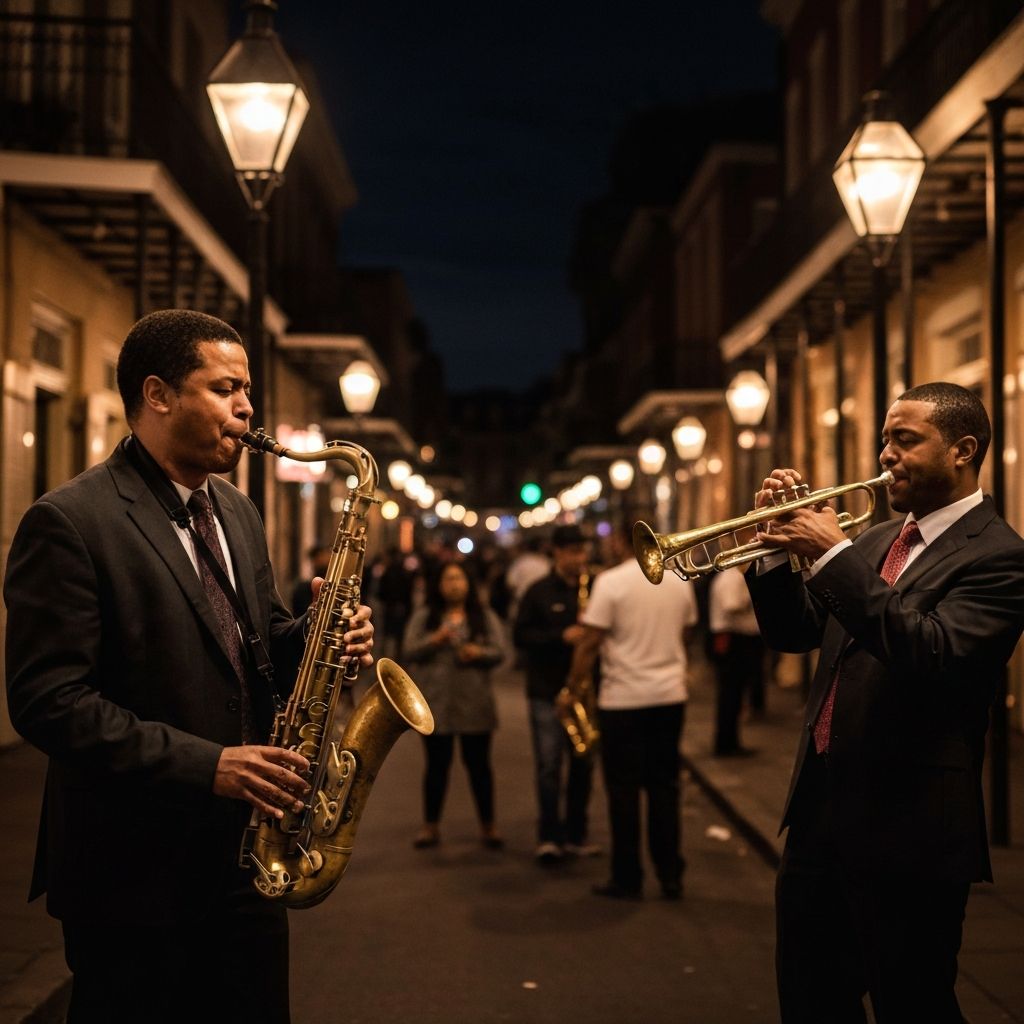
As the sun sets, Bourbon Street comes alive with neon lights, music, and the unmistakable energy of the French Quarter nightlife. Explore the vibrant bars, jazz clubs, and lively street performances. Preservation Hall has been a cornerstone of the city's music scene since 1961, hosting nightly performances by local jazz legends. But the story of New Orleans music runs deeper than any single venue, encompassing a rich heritage that gave birth to jazz itself and continues to shape American music today.
The Birthplace of Jazz
New Orleans holds the undisputed title as the birthplace of jazz, a distinction that makes it one of the most important cities in American musical history. In the late 19th and early 20th centuries, the unique cultural conditions of New Orleans—the blending of African rhythms, European classical traditions, blues, ragtime, and the brass band traditions of social aid and pleasure clubs—gave rise to a completely new form of musical expression. Congo Square, located in what is now Louis Armstrong Park, served as a gathering place where enslaved Africans could practice their musical traditions, preserving rhythms and musical concepts that would later fuse with other influences to create jazz. Storyville, the city's legal red-light district from 1897 to 1917, provided employment for countless musicians whose nightly performances in brothels and dance halls refined the emerging jazz sound. Legendary figures like Buddy Bolden, often credited as the first jazz musician, King Oliver, Sidney Bechet, and the incomparable Louis Armstrong all emerged from this fertile musical environment, eventually spreading New Orleans jazz to Chicago, New York, and the world. Today, that heritage lives on in every note played in the city's countless music venues.
Preservation Hall: Living History
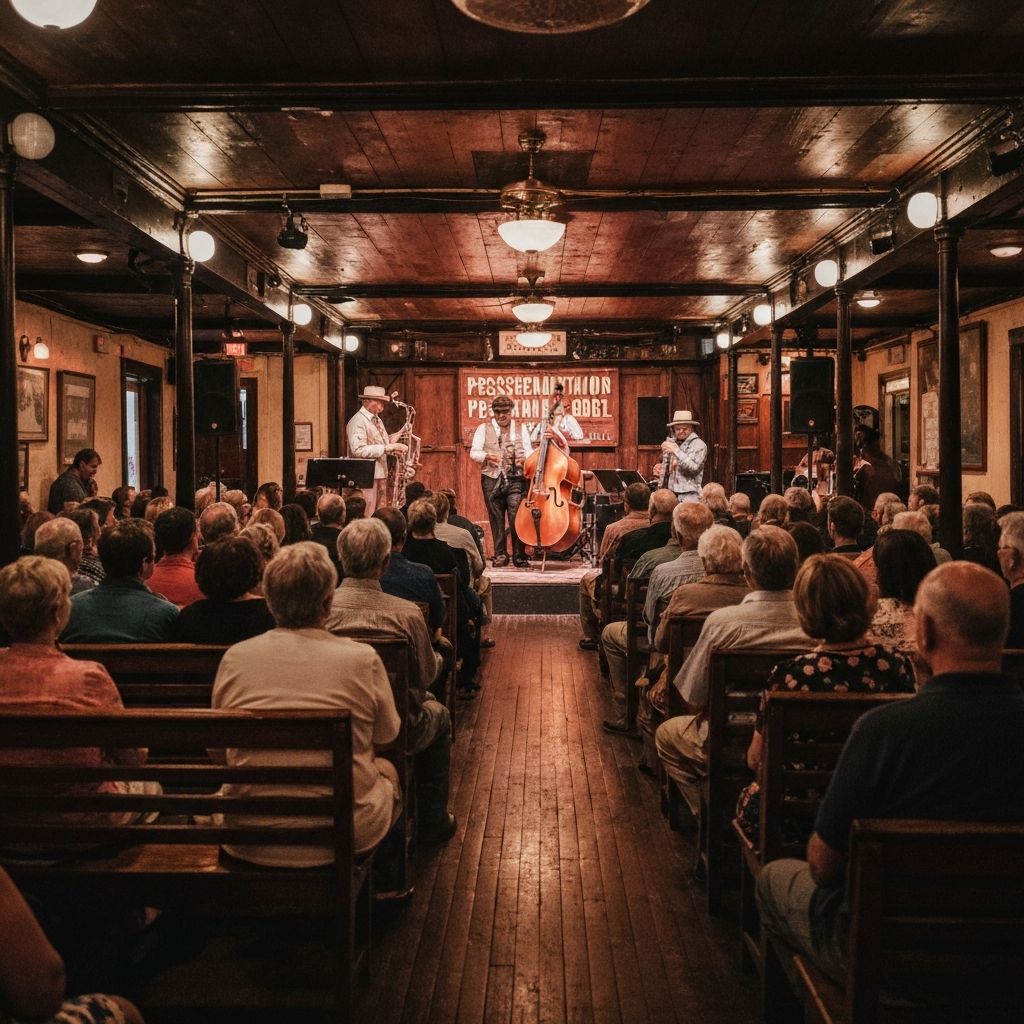
Preservation Hall, tucked away on St. Peter Street in the French Quarter, stands as perhaps the most important venue for experiencing authentic traditional New Orleans jazz. Founded in 1961 by Allan and Sandra Jaffe, the hall was created with a simple mission: to preserve and protect New Orleans jazz and the musicians who play it. The venue itself is deliberately humble—a small, weathered room with no air conditioning, minimal seating, and no bar service—because the focus is entirely on the music. The Preservation Hall Jazz Band, the resident ensemble that has toured worldwide and collaborated with artists from every genre, maintains the traditional New Orleans jazz repertoire while continuing to evolve and attract new audiences. Nightly performances feature rotating ensembles of master musicians, many of whom descend from the original jazz families whose ancestors helped create the music over a century ago. The intimate setting, where audiences sit on wooden benches or cushions on the floor just feet from the performers, creates an experience that recordings simply cannot capture. Lines form early for the shows, which begin at 5 PM and continue through the evening, with each 45-minute set offering a different ensemble and repertoire.
Frenchmen Street: The Local Music Scene
While Bourbon Street attracts the most tourists, serious music lovers increasingly head to Frenchmen Street in the Marigny neighborhood, where the local music scene thrives nightly. This three-block stretch has earned its reputation as the city's best live music destination, featuring an eclectic mix of jazz, brass band, funk, blues, and everything in between. The Spotted Cat Music Club, a tiny venue with no cover charge, regularly features some of the city's best traditional and gypsy jazz performers, with audiences dancing in the narrow space between the band and the bar. The Maison offers a larger room and eclectic programming that might include brass bands, DJs, or funk ensembles depending on the night. d.b.a. New Orleans showcases touring acts alongside local favorites in an intimate listening room atmosphere. Blue Nile and the Allways Lounge provide additional options, while Three Muses combines live jazz with a creative small plates menu. Unlike Bourbon Street, where cover bands and karaoke dominate many venues, Frenchmen Street showcases original New Orleans music performed by local musicians who have dedicated their lives to their craft.
Bourbon Street: The Entertainment District
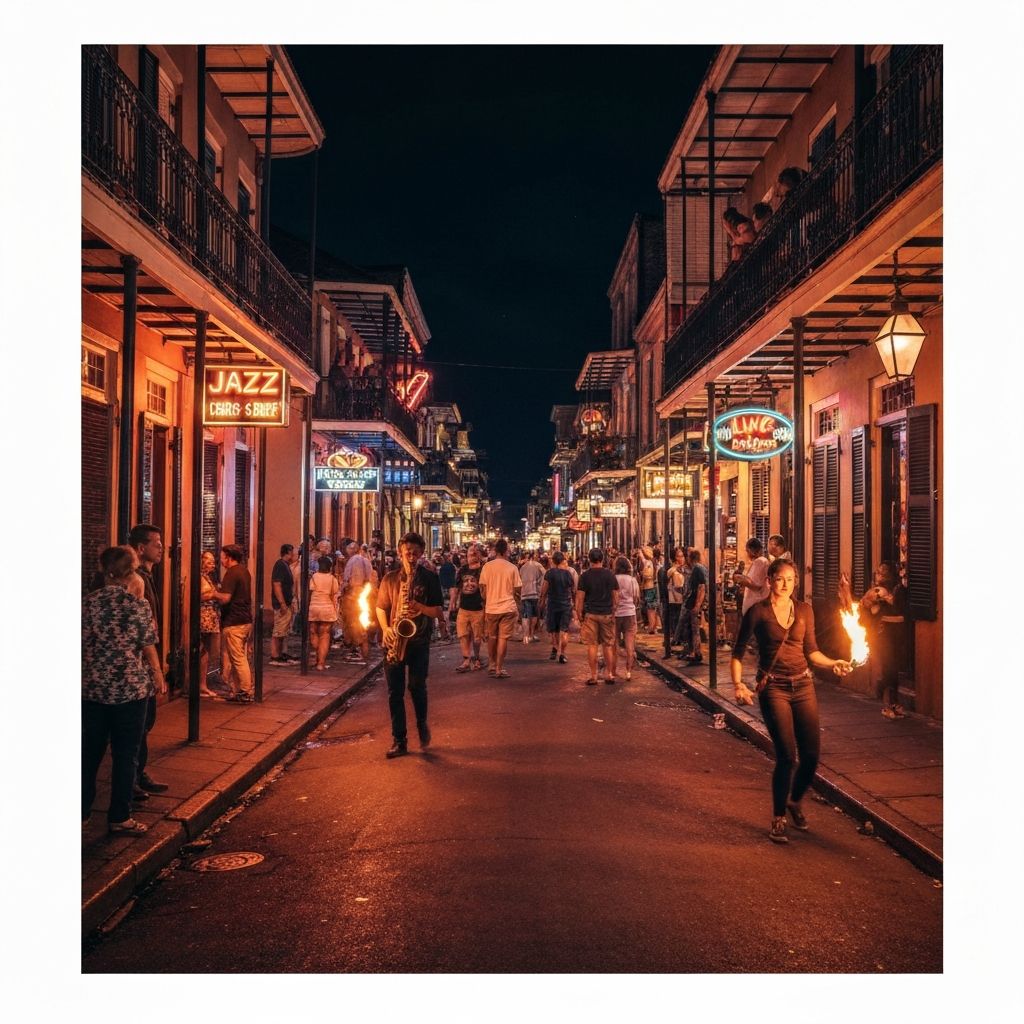
Bourbon Street often receives criticism from jazz purists, but dismissing it entirely means missing some genuine New Orleans experiences. While much of the street caters to tourists with loud cover bands and party bars, several venues maintain connections to the city's jazz heritage. Fritzel's European Jazz Pub, operating since 1969, presents traditional jazz in an intimate beer hall setting with nightly performances by local musicians. Maison Bourbon Jazz Club, despite its location amid the neon chaos, hosts traditional and Dixieland jazz throughout the week in a dedicated listening environment. The Famous Door, one of Bourbon Street's oldest venues, presents rhythm and blues, funk, and other New Orleans musical styles. For those seeking the full Bourbon Street experience, the street's open container laws allow visitors to stroll with their drinks, taking in the various sounds emanating from different doorways and catching street performers who often include genuinely talented musicians. The key to appreciating Bourbon Street is understanding that it represents one aspect of New Orleans' musical culture—the celebration, the party, the joie de vivre—even if it's not the place for concentrated listening.
Second Lines and Brass Bands
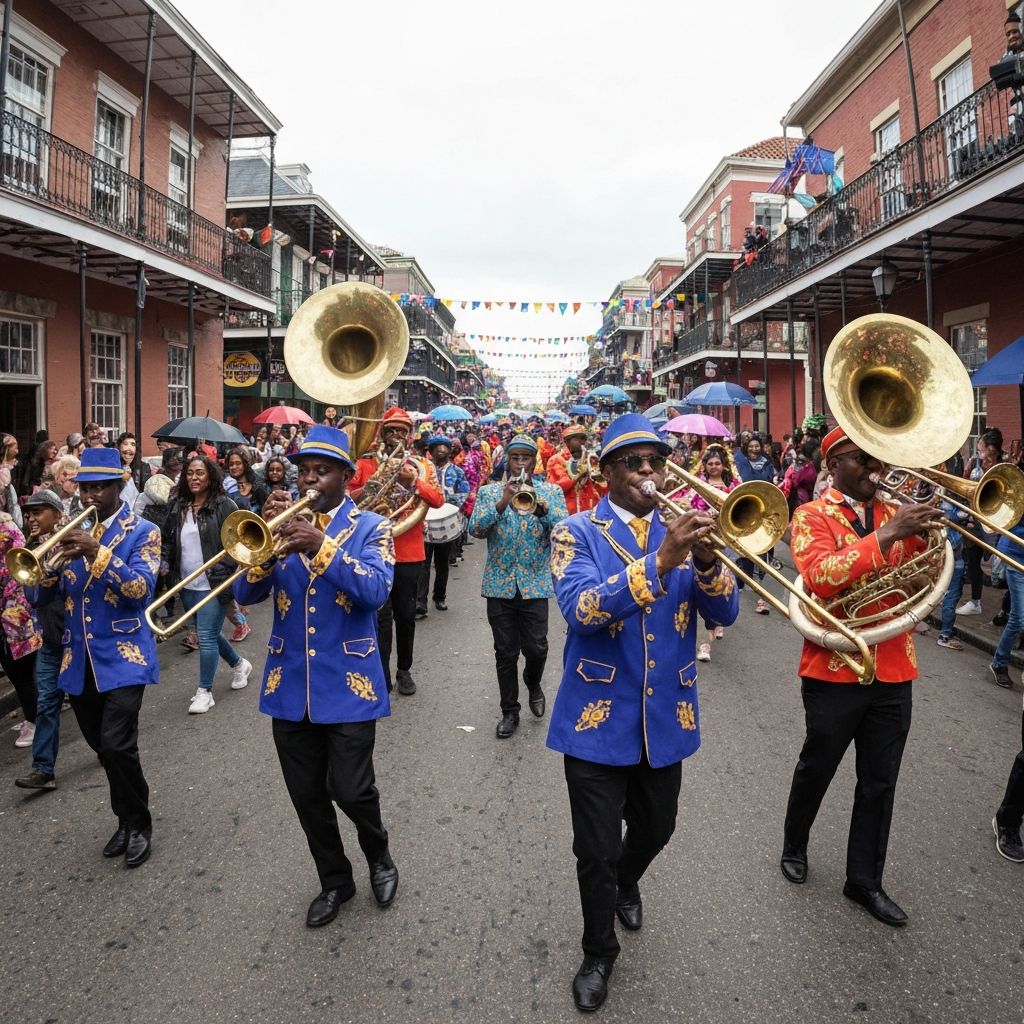
Perhaps no New Orleans musical tradition captures the city's spirit more completely than the second line, a community parade featuring a brass band that moves through neighborhood streets while revelers follow behind, dancing, twirling parasols and handkerchiefs, and celebrating life. The tradition originated with social aid and pleasure clubs, African American organizations that provided mutual assistance to members and organized jazz funerals that evolved into celebratory parades. Today, second lines occur almost every Sunday afternoon from late August through early June, organized by various social aid clubs according to a schedule that takes them through different neighborhoods. The brass band leading the parade plays a repertoire ranging from traditional hymns to contemporary hits reimagined in the New Orleans brass band style, while the "second line"—everyone following behind the official club members—joins in the celebration. Contemporary brass bands like the Rebirth Brass Band, Hot 8 Brass Band, Soul Rebels, and Treme Brass Band have achieved international recognition while maintaining their roots in this community tradition. Visitors can experience brass band music at venues throughout the city, but catching an actual second line offers an authentic community experience unavailable anywhere else in the world.
Live Music Every Night
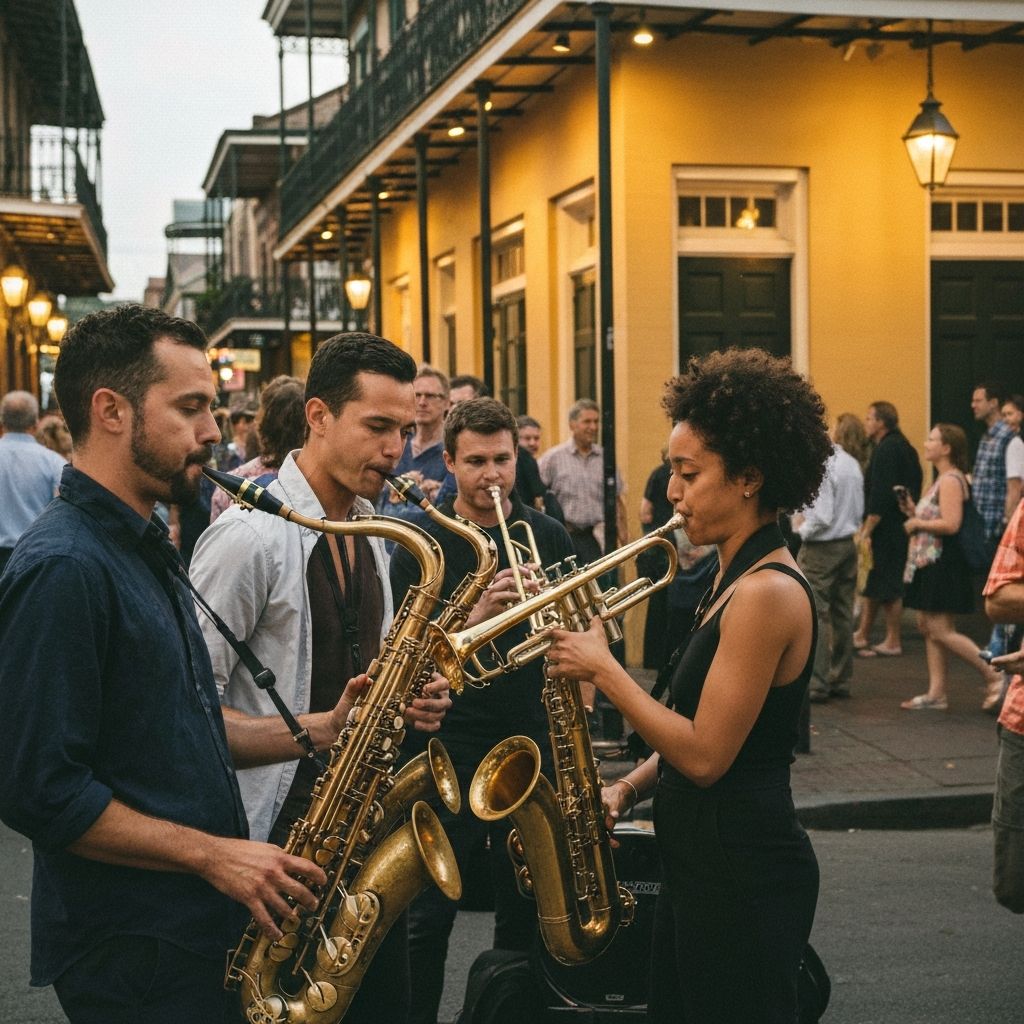
Beyond the famous venues and traditions, live music permeates every corner of New Orleans life. On any given night, visitors can find music in hotel lobbies, restaurants, street corners, and venues ranging from elegant concert halls to neighborhood bars. The Maple Leaf Bar in the Carrollton neighborhood has hosted legendary shows for decades, with the Rebirth Brass Band's Tuesday night residency considered essential New Orleans experiencing. Tipitina's, the legendary uptown venue named for a Professor Longhair song, presents touring acts and local favorites in a storied room that has witnessed countless historic performances. The Howlin' Wolf and Republic New Orleans offer larger concert experiences in the Warehouse District. For more intimate settings, Snug Harbor on Frenchmen Street presents modern jazz in a dedicated listening room, while Palm Court Jazz Cafe serves traditional jazz alongside Creole cuisine. Even venues not primarily known for music regularly feature performers, ensuring that the New Orleans soundtrack accompanies meals, drinks, and casual conversations throughout the city. This ubiquity of live music reflects its central importance to New Orleans culture—it's not entertainment separate from daily life, but rather an essential element woven into the fabric of the city itself.
Plan Your New Orleans Visit
Find the best accommodation and start exploring everything the Crescent City has to offer.
Browse Accommodation in New Orleans