Most visitors arrive in New Orleans, check into a room near Bourbon Street, spend three days inside a seventy-eight square block radius, and fly home convinced they have seen the city. They have seen its most famous room. They have not seen the house. New Orleans is a collection of villages that grew into each other over three centuries, and each one kept its own accent, its own architecture, and its own idea of a good Tuesday evening. The remarkable thing is how close they all are. Almost every neighborhood in this guide sits within twenty minutes of the Quarter by streetcar, bicycle, ferry, or a genuinely pleasant walk. What follows is not a list of places to photograph. It is a guide to where the city actually lives, what to do once you arrive, and how to behave like a guest rather than an audience member.
Faubourg Marigny: The Quarter's Cooler Younger Sibling
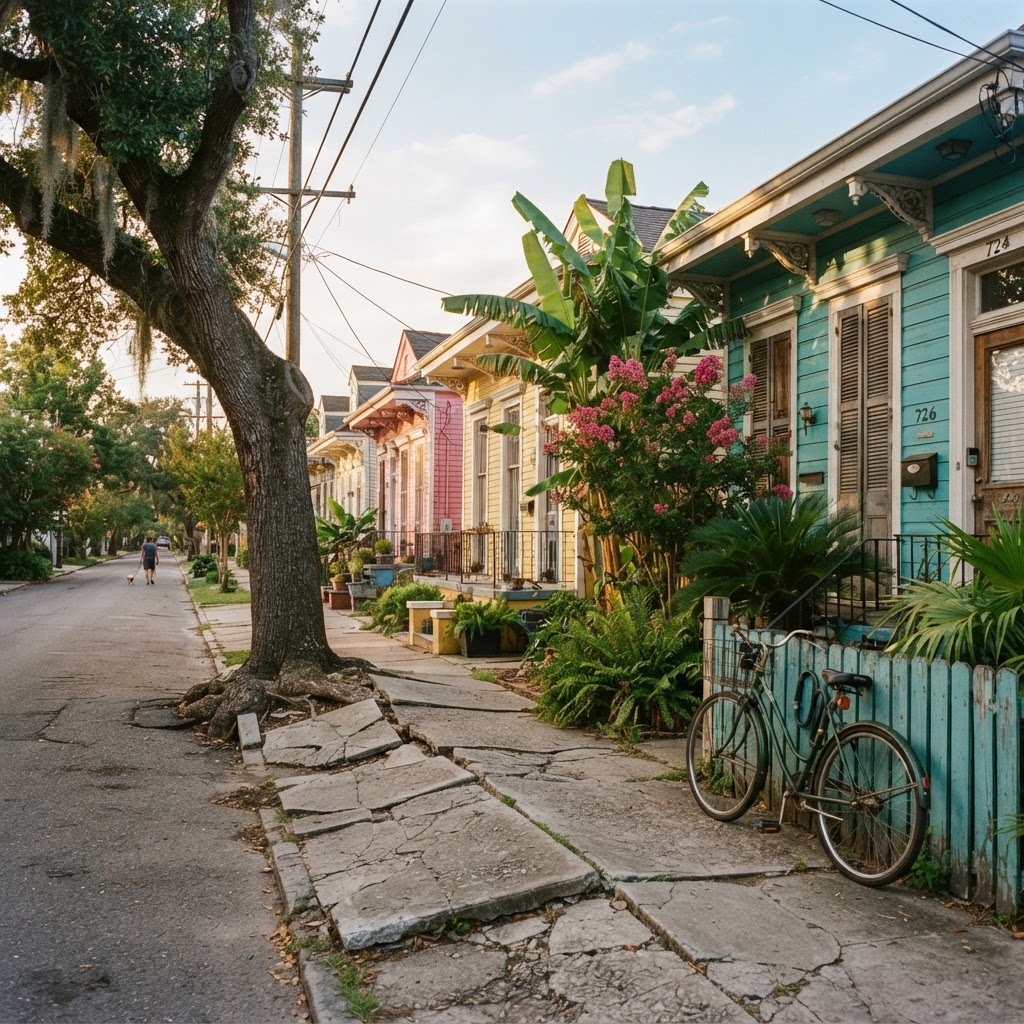
Cross Esplanade Avenue at the downriver edge of the French Quarter and the volume drops by half almost immediately. The Faubourg Marigny was laid out in 1805 on the former plantation of Bernard de Marigny, a Creole aristocrat who reportedly gambled away much of his fortune and subdivided his land to cover the losses. The result is a neighborhood of pastel Creole cottages and shotgun houses on streets narrow enough that neighbors hold conversations from opposing porches.
Frenchmen Street is the reason most people cross Esplanade, and for good reason: three blocks containing more working musicians per square foot than almost anywhere in America. But the Marigny rewards visitors who keep walking. Royal and Chartres Streets continue downriver into residential blocks where the architecture is every bit as beautiful as the Quarter's and entirely free of daiquiri shops. Washington Square Park anchors the neighborhood with live oaks and dog walkers. The corner stores sell cold drinks and local gossip in equal measure.
The insider move here is timing. Frenchmen Street clubs generally run three sets a night, and the first one, usually starting between six and seven in the evening, is played to a half-empty room by musicians who are warming up and taking chances. You will hear better music, sit closer, pay less, and be able to hold a conversation. Come back at eleven if you want the crowd.
Bywater: Warehouses, Wildflowers, and the Best Breakfast in Town
Continue downriver past the Marigny and you reach Bywater, a neighborhood that spent most of the twentieth century as working riverfront and most of the twenty-first as one of the most photographed residential districts in the South. The houses are painted in colors that would look absurd anywhere else and look exactly right here: flamingo pink beside teal beside a yellow that can only be described as aggressive. Many were built for shipyard workers and dockhands, which is why they sit so close together and so close to the street.
Crescent Park is the neighborhood's great modern gift, a linear park built along the old wharves with a rust-colored arched pedestrian bridge that has become a local landmark. From the park's concrete steps you get an unobstructed view of the Mississippi at a bend where enormous container ships pass close enough to feel. It is the best free view in New Orleans and, at sunrise, almost empty.
Bywater is also where you should eat breakfast. The neighborhood's cafes and bakeries operate at a scale and price that the Quarter abandoned decades ago, and the lines are made up of people who live within four blocks. Expect a wait, expect it to be worth it, and expect to be the only one in the room consulting a map.
Tremé: Where the Music Was Invented
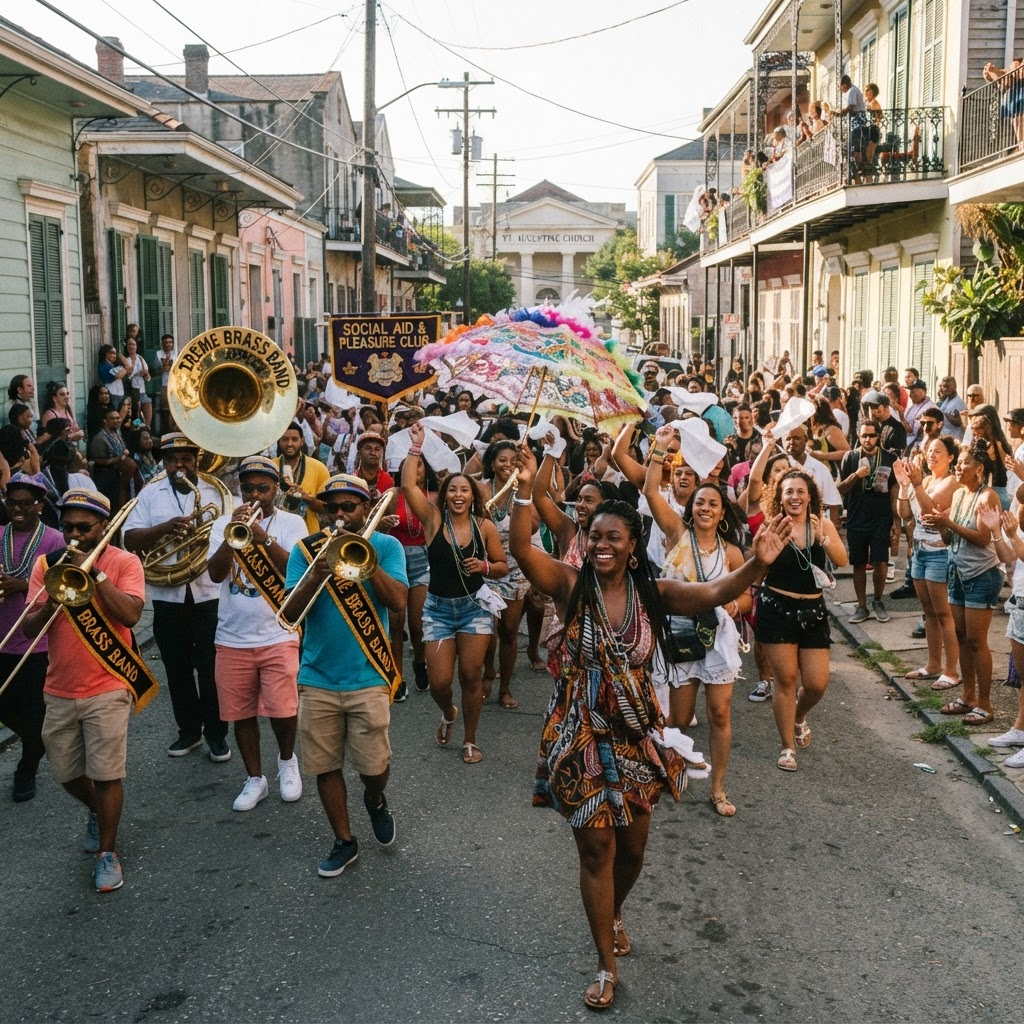
Just across Rampart Street from the Quarter lies Tremé, widely recognized as the oldest African American neighborhood in the United States and, by any honest accounting, one of the most historically important few square miles in American cultural history. Free people of color bought property here beginning in the late eighteenth century. Congo Square, now inside Louis Armstrong Park, was the one place in the antebellum South where enslaved and free Black residents were permitted to gather on Sundays to trade, drum, and dance. The rhythmic traditions preserved in that square are the direct ancestors of jazz, and therefore of nearly every popular American music that followed.
Visit the Backstreet Cultural Museum, a small institution of enormous significance that documents Mardi Gras Indian suits, social aid and pleasure club traditions, and jazz funerals with a depth no larger museum has matched. Stand in Congo Square and read the marker. Walk past St. Augustine Church, founded in 1841 by free people of color, where the Tomb of the Unknown Slave stands outside as a memorial made of rusted chain and iron.
If your visit includes a Sunday afternoon between roughly late August and early summer, ask a local record shop or bar which social aid and pleasure club has a second line rolling, and go. A second line is a moving neighborhood parade led by a brass band, and the crowd walking behind the band is the second line itself, which means you are welcome to join. Two rules: never step in front of the band or the club members in their finery, and buy something from the vendors selling drinks and food along the route. This is a community tradition that graciously tolerates visitors. It is not a performance staged for them.
The Garden District and Uptown: Riding the Oldest Streetcar in the World
The St. Charles Avenue streetcar line has been running since 1835, which makes it the oldest continuously operating street railway on the planet. For the price of a single fare you get a rolling tour of antebellum mansions, Tulane and Loyola universities, and a canopy of live oaks so dense the light turns green. The correct approach is to board downtown, ride the full length to Carrollton Avenue, and walk back into whichever section looked most appealing through the window.
Get off at Washington Avenue for the Garden District proper, where American cotton and sugar money built Greek Revival and Italianate mansions in the 1840s and 1850s specifically to outshine the Creole townhouses downriver. The rivalry was real, and the architecture is its receipt. Two blocks away, Magazine Street runs six miles through Uptown with the city's best concentration of independent bookshops, vintage stores, furniture dealers, and neighborhood restaurants.
One practical note that saves visitors real frustration: the streetcar is charming and it is slow. Budget forty-five minutes end to end and treat it as the attraction rather than the transportation. If you need to actually be somewhere, walk or take a car.
Mid-City: Oaks, Bayous, and Sculpture
Mid-City is where New Orleans residents go to see other New Orleans residents. Its heart is City Park, which at roughly 1,300 acres is one of the largest urban parks in the country and home to a stand of live oaks that includes trees estimated at six to eight hundred years old. Their limbs have grown so heavy they rest on the ground and continue outward, which produces the single most photographed silhouette in Louisiana.
Inside the park, the New Orleans Museum of Art holds a serious collection and its adjacent Besthoff Sculpture Garden spreads contemporary work across lagoons, bridges, and pine shade at no charge. Nearby, Bayou St. John offers a slow green waterway where locals paddle, picnic, and hold impromptu Sunday gatherings on the grassy banks.
Mid-City is also the reason to learn the Canal Street streetcar line. It splits at Carrollton, with one branch running to the park entrance, and it connects the neighborhood directly to the Quarter in about twenty minutes.
Algiers Point: A Ferry Ride to Another Century
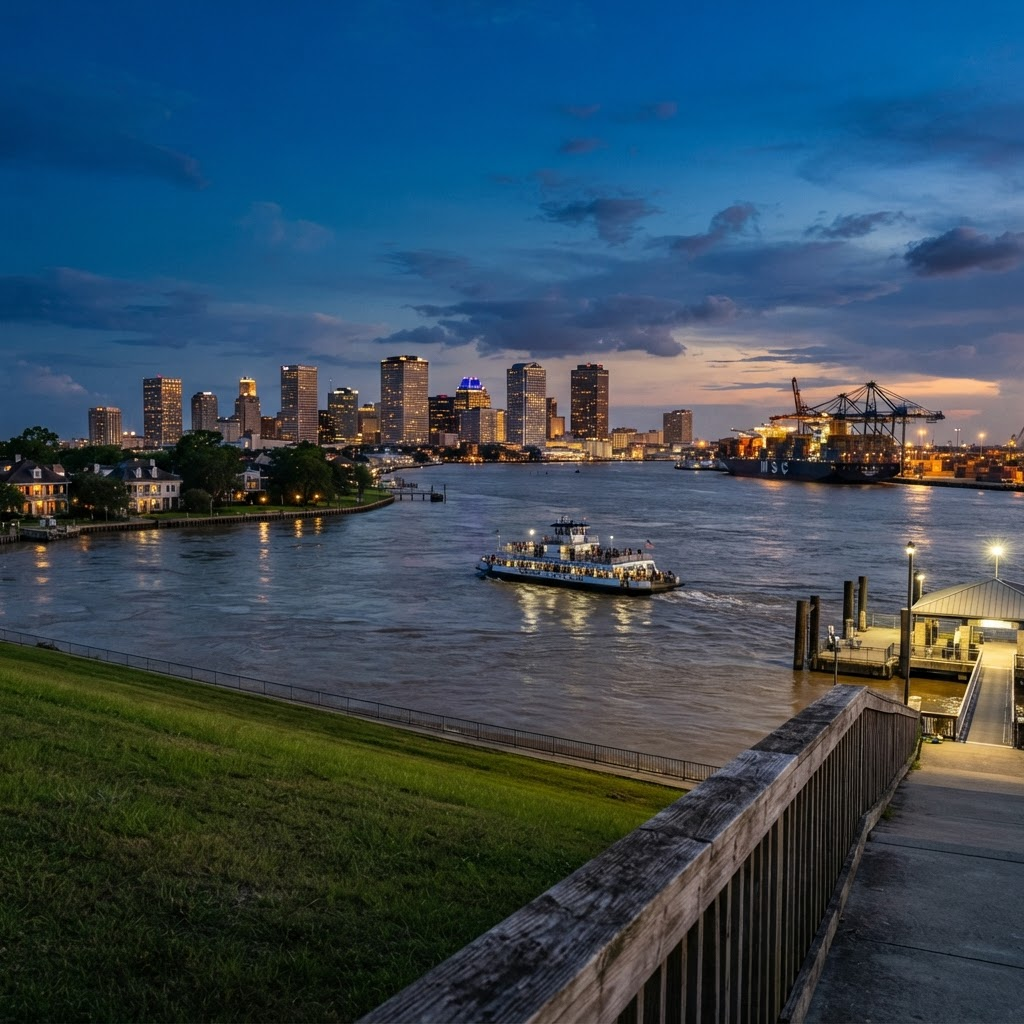
Almost nobody does this, and almost everybody who does calls it the highlight of their trip. The Algiers Point ferry leaves from the foot of Canal Street, crosses the Mississippi in roughly ten minutes, and deposits you in a neighborhood of nineteenth century cottages that feels like a small river town that happens to have a skyline view. Algiers is the second oldest neighborhood in New Orleans, established in 1719, and it survived the great fires that repeatedly leveled the Quarter, which means some of the oldest continuously standing residential fabric in the city is here.
Walk the levee path for the classic postcard view of downtown across the water. Wander the quiet streets. Have a drink at a neighborhood bar where the bartender will ask where you are from and mean it. Then take the ferry back at dusk, when the skyline lights come on over the water and the working ships slide past in the dark. The round trip costs less than a cocktail in the Quarter.
Bayou St. John and Esplanade Ridge: The Avenue That Time Forgot
Esplanade Avenue runs from the river to City Park along a natural ridge of high ground, and it is, block for block, the most underappreciated grand avenue in the American South. Where St. Charles Avenue draws tour buses, Esplanade draws joggers and residents walking dogs beneath an unbroken oak canopy past Creole mansions, Italianate villas, and the occasional startling Queen Anne. This was where the wealthy Creole families built when the Quarter grew crowded, and their houses remain, many still private residences.
Walk it in the morning from the Quarter toward the park, a distance of about three miles that passes the Degas House, where the French Impressionist stayed with Louisiana relatives in 1872 and painted, and St. Louis Cemetery No. 3 with its rows of above-ground tombs. Finish at Bayou St. John and you will have crossed the entire city on foot through a corridor almost no visitor knows exists.
How to Choose Your Base
Where you sleep shapes everything about your trip. Staying in or beside the French Quarter puts you inside the action and within walking distance of the Marigny, Tremé, and the ferry, at the cost of nighttime noise. The Warehouse Arts District offers loft-scale space, museums at the doorstep, and a fifteen minute walk to the Quarter along the riverfront. Uptown and the Garden District trade immediacy for oak trees, quiet, and a streetcar stop, which suits longer stays and travelers who want a kitchen and a neighborhood rather than a lobby.
Whichever you choose, resist the urge to see everything. New Orleans does not reward the thorough visitor. It rewards the one who sits still on a stoop long enough for something to happen.
Plan Your New Orleans Visit
Find the best accommodation and start exploring everything the Crescent City has to offer.
Browse Accommodation in New Orleans